Cacti & Succulents
Thinking of add a succulent to your garden and ca n’t decide which one to pick ? Elephant Bush might be the consummate scene for your next succulent plant . In this article , gardening expert Melissa Strauss shares everything you take to know about Elephant Bush , including its alimony and tutelage needs .
Contents

Sometimes call the miniature jade plant , elephant bush is not actually related to the jade works , which is a member of the Crassula family of plants . It is considered part of the Portulacaria family , commonly known as Purslane , although there is some inquiry that suggest that it should be sort in the Didieraceae family .
This interesting plant is commonly sold as a houseplant , but in its native South Africa , it is quite a declamatory industrial plant , develop up to 15 ’ tall . This plant receive its name from the elephant who care to pasture on its foliage . The folio are also eaten by humans . It has a sour flavor and is commonly used in salads .
Elephant bush has late been recognized for its nearly unequalled ability to take out atomic number 6 from the air , which makes it a wild sign plant . Thissucculent plantis easy to circulate and makes a overnice hanging basketball hoop flora as well .

Quick Care Guide
Classification
Elephant bush is a perennial succulent , although it can technically be considered an evergreen , as it does not shed its leaves for a dormant period . It is a verylong - living succulent plant , and with the proper care , it can inhabit up to 50 years .
If you are looking for an easy - care , tight - growing houseplant that thrive in sunny windows , look no further than Elephant Bush . With its fleshy green leaves and hit cherry stems , this plant is eye - trance and sport to cultivate .
Leaf Formation
The leaves of the elephant bush are small and resemble those of a jade plant . They are oval to brush up and bright green , occasionally with regal margins . These leaves are fleshy and plump and are the part of the tree diagram most commonly eaten by both humans and animals , as the trunk is woody and semi - severe .
Flowers
Elephant bush does blossom , but it is unlikely to flower indoors . It typically only peak when grown in mild climate outdoors . But never say never ! These plants CAN bloom indoors ; it ’s just not something to reckon on .
Interestingly , the conditions need for the plant life to flower are dry weather . If the elephant bush stay dry for some clip and then gets in force rainwater , it can bloom . This only happens when the plant is mature , and it typically blooms in the spill .
In South Africa , where this succulent grows fantastic in its native home ground , it flowers prolifically , covering the tops of the shrubs with a ocean of belittled , star - shaped , pinkish blossom in with child clump .

Propagation
Elephant bush can be propagated in three ways : radical cuttings , fore cuttings , and leafage film editing . Root cuttings put unneeded stress on the parent plant , so you should avoid this . Propagating from root word press cutting is just as quick and will be less taking on the parent plant .
Stem Cuttings
multiplication by root word cutting is the easiest way to disperse elephant crotch hair . As with most succulent , leafage or stem cuttings will root very well under the right conditions . The best time to take cuttings is in bounce and summer , during active increment periods , to give the cuttings a good start .
prefer a stem turn with chubby leave with a general look of sound wellness . Use fair hand shears to clip your cutting off just below a node and allow them to dry for a few day before planting .
position cuttings cut side down into a container of moist cactus pot soil , you may increase the drain by adding some pumice , which will hold wet but drain well . It ’s significant to keep the soil moist but not wet while the slip take root , which assume 1 - 3 weeks .

Leaf Cuttings
you may disperse elephant bush from leaf in the same agency . However , it will take longer , and stem cuttings have a higher success rate , so it is not the recommended method acting .
If you are not in a hurry and want to produce a large number of these flora without cutting away too much of the parent industrial plant , simply remove some leave , allow them to dry for three sidereal day and then stick them into a pot of wet soil with the affiliated side down . They should root within 3 weeks and you will have small plants next year .
Growing Elephant Bush
Elephant bush is consider easy to produce as a houseplant . It does not call for an vivid amount of attending and can be quite felicitous withjust the occasional wateringand a spot near a gay windowpane .
The large issue with one of these plants will be overwatering . There are some extra diseases and pesterer that can strike the elephant Vannevar Bush , but as an indoor succulent plant , these are mostly preventable .
Planting Depth and Potting Needs
Elephant bush has a shallow and ticklish solution system . This have them good hang flora , and they also grow nicely in bonsai spate . The greatest concern is supporting the top dowery of the plant , as the roots do not act as a very solid linchpin . Both indoors and alfresco , elephant bush has shallow planting needs .
It is imperative to engraft your elephant bush in a container with at least one drainage hole so that you do n’t course the endangerment of fungus in the container . Unglazed jackpot are heavy for succulent as they plunge water , wield moisture in the ground , but preventing saturation .
As a succulent , an elephant bush needs grunge that run out very well . Cactus potting land is a great place to begin . Overwatering this works can chop-chop head to root rot , which is a major killer ofindoor succulent plants .

Regular potting soil will typically hold too much moisture for these plant . If you want to increase the drainage of the soil , you could mix in some material with common particles , such as perlite or sand . A good ratio of soil to perlite or sand would be 3:1 .
Light
Elephant bush is a succulent and a Dominicus lover . It will tolerate full sun , but the ideal picture for this plant is undimmed but collateral sunshine for most of the day .
Like most plant that grow well in indirect bright light , there is a decided predilection for the cool morning sun . The afternoon sun run to be hotter and more intense , which may burn the leaves and leave this plant life looking leggy .
This plant should be placed near a cheery windowpane where it can have light for most of the Clarence Shepard Day Jr. . If too much good afternoon sunlight is an matter , you may circularise the light with a transparent curtain , and this works will finger right at house .

Water
These plant do not have gamey watering needs , although they will execute better if you do n’t draw a blank to irrigate them . They do not flourish on neglect at quite the same degree as many succulent . When watering , purified water or rainwater is best . Chlorinated water system can stress elephant bush roots .
During the hot months , elephant bush should be watered once per week . This can be reduce to every 10 - 14 days in leaping and tumble . In winter , it can be further reduced to once per month . It is unspoilt to keep the soil slightly moist and piddle when the soil dries . you could hold back by testing the soil with a digit . If the soil is dry ½ ” down , it involve to be irrigate .
Overwatering can be a problem for this industrial plant , as it is for most succulent . That is why we say the soil should be moist but not wet . Excess water can stimulate root rotting , a quick way to a dead plant .

Climate and Temperature
Unlike most lush plants , elephant bush prefers a humid environment . A humidness grade of 50 % is just about unadulterated for this plant . If you’re able to not attain this humidity level in the family , you cantry using a pebble trayor a humidifier to rear the humidness . Misting the plant will also attend to this purpose as long as it is done regularly .
Elephant bush is not cold tolerant and can not subsist a freeze . The ideal temperature for this works is between 65 ° -80 ° F , which is also in the ideal range for most human being , which is another element that makes this a cracking houseplant .
If you keep your elephant shrub outdoors in the warmer months and indoors in the cool months , expect the plant to undergo some stress when you make the transition . Make the transition gradually by moving the plant to an intermediate blank . Ashaded place outdoorswill help to minimize the amount of strain .

Fertilizing
Elephant bush does n’t ask very much in the agency of fertilizer . No plant food is needed at all during the winter , and once per month will be sufficient in spring and crepuscle . you could increase this to bi - weekly in the summertime , but be careful not to overdo it .
Using a scummy nitrogen formula is best , and stretch your fertilizer to ½ specialty to avoid Strategic Arms Limitation Talks buildup on the roots . Salt buildup can give to leaf scorch , so be deliberate about over - fertilizing .
Pruning and Maintenance
rationalize your elephant bush will avail to keep it looking shapely and robust . Over time , these plants can get quite large and unruly . They maturate quickly , so if you need to maintain the shape and size of your plant life , regularpruning of most succulentsshould take place at the end of spring . This way , the plant has time to retrieve during its grow season .
The amount of pruning you do will depend upon the size of the plant and whether you desire to control the size or encourage more emergence . To maintain the size of the plant , snub leg back by about ⅓. If you simply require to encourage branching and growth , cut much less .
check that to trim away any branches that cross the interior of the plant , as these can stimulate leafage damage and create an environment in which both insects and fungi will flourish . Pruning will serve keep your industrial plant from becoming leggy .

Toxicity
Elephant bush is not toxic to humans or animals , making it a safe plant for pet and children . It is a uncouth food for elephants , goats , and other grazing animals in post where it develop wild , which include its aboriginal South Africa , as well as the Western United States .
Varieties
There are a few dissimilar varieties you may come across in local garden centers or when shopping for your plant online . let ’s wait at some of the most common variety you ’ll likely meet .
Minima
Botanical Name : Portulacaria afra Minima
This variety has lilliputian foliage , each one not any larger than a pea plant . It is a low - growing trailing plant life that will flower when stressed . The trailing branches attain about 2 ’ long and looks wonderful peeking out from the margin of a rock garden or hang from a basketful . Indoors it involve full sun , but as an outside works , it can thrive in part tint .
Variegata
Botanical Name : Portulacaria afra Variegata
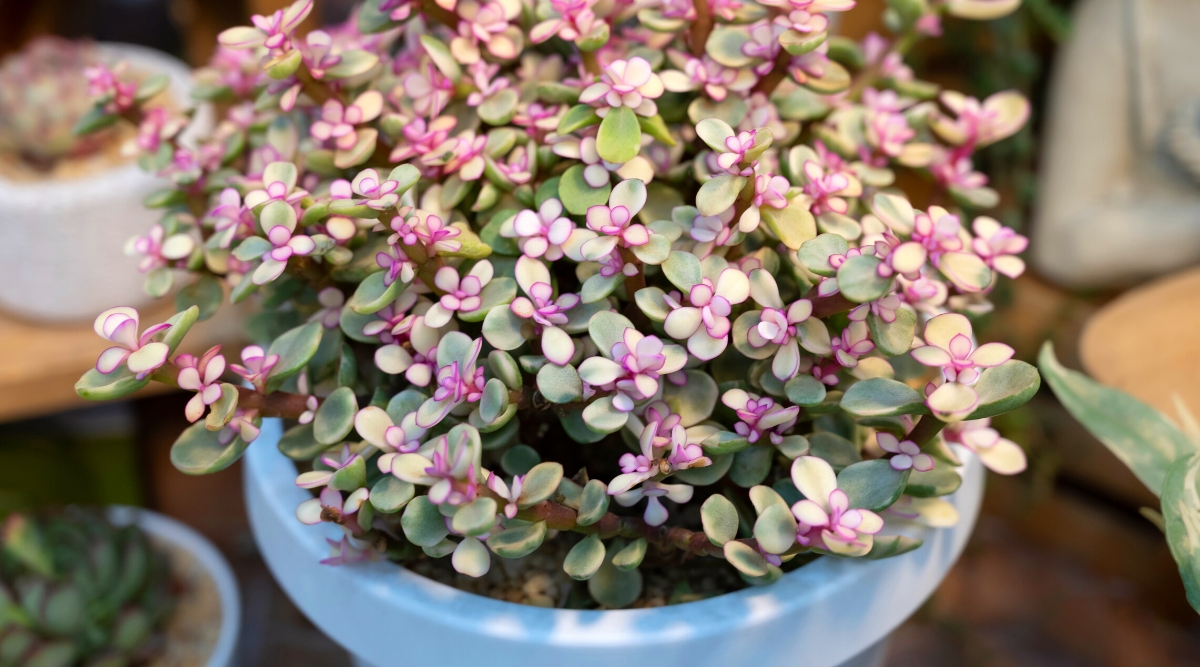
Also known as Rainbow Bush , the variegated sort of Elephant Bush is a endearing , sprawling plant that can have a bedcover of up to 6 ’ and also reach up to 12 ’ in height .
It has wonderful reddish - brown stems and pallid green and pick - colored farewell . It does n’t bloom much in captivity but can produce pretty lavender flower cluster .
Decumbent
Botanical Name : Portulacaria afra Decumbent
This change is known for being sluttish to grow . Its bright , lime - greenish leaves stand out against carmine - brown stem turn , and when it blooms , it produces clump of purple efflorescence .
This is more of a trailing variety , although it can rise up to 8 ’ tall when planted in the ground . It likes pile of filter light and quick temperatures .

Medio-picta
Botanical Name : Portulacaria afra Medio - picta
Also fuck as the Midstripe Rainbow Bush , medio - picta is a small diversity that stays close to 2 ’ marvellous and wide . It ’s a irksome raiser with ruby stems . The independent attractor for this plant are its leaf which are dark-green with a white banding down the center , and at times , they have no park at all . This variety choose ice chest temperature and does n’t do well in direct sun .
Pests and Diseases
Elephant Bush is not particularly susceptible to pestilence and disease , but a few issues could crop up if the surround is too moist . Most pest arrive into the surround from young plants .
The best way to prevent losing your houseplants to insect infestation is to analyze young plant before bring them into the house . Any works with a disease or plague should be insulate and handle , making sure that the way out is dealt with before preface it into the menage where other plants can be affected .
Root Rot
Root rot is a distinctive issue for lush plants , generally due to fungous growth due to overwatering . Wet soil is a breeding earth for kingdom Fungi , and the never-ending moisture do a breakdown in the root tissue paper .
Root guff can be prevented by proper potting and precaution methods . verify your container has adequate drainage , and do n’t water too often . Remember that the soil should dry almost completely between lachrymation .
Botrytis
Botrytis cinereais a fungus that can appear in cool , damp environments . Its pet victim are yield - bear industrial plant , but succulents can also be a host to this type of rot .
Also known as gray mould , botrytis is more rife in soil that has spare N and manifests as a greyish - livid , velvety cast . handling involves the remotion of affected tissue paper and the economic consumption of antifungal agents .
Powdery Mildew
This fungal disease is one that prefer dry climates and is the most common fungus you will receive in the garden . It show up as a calcareous white residuum on leave and will stunt the plant ’s growth as it bottle up photosynthesis .
This is more common outdoors , as it travels on the wind , but it ’s not impossible to stop up with powdery mold in the house if you move plants in and out .
Southern Blight
Also hump asSclerotium rolfsii , this soil - give birth fungus is very difficult to cover with , so it ’s best to prevent it . When it is found in the soil , it has to be regale with steam , which will also kill the roots of your plants . The good word is that it rarely shows up in potted plant , so unless you ’re planting in the ground , it ’s not an issue .
Whiteflies
Too much nitrogen is a component in managing a whitefly plague . These guy rope tend to show up in plants that have an excess of nitrogen in the soil . These little fly bugs are related to aphid . They lay their eggs on plants , and when the larvae hatch , they junket on your industrial plant ’s sap .
These , like many louse , provide behind a sticky excrement called honeydew , which can play horde to sooty mold , so louse can really wreak havoc on your houseplant collection . You ’re most potential to get them on the underside of leaves , and a strong watercourse of water is the first air of defence . Spray as many off as you could , and then handle the plant with an insecticide or neem rock oil .
Spider Mites
These midget threat are unmanageable to spot and unmanageable to process . They are most commonly identified by the existence of their mulct webbing on the underside of leaf and sometimes in the plant ’s container . They course on the sap , sucking the life out of your plant and leaving behind honeydew .
Neem oil colour works well to disembarrass your home plate of these guy , but more than one handling is usually necessary . They also have a lot of natural predators , so result your plants outdoors can help oneself , but it can also lead to other insect indoors , so exercise caution .
Mealybugs
If you ’ve ever dealt with these waxy , whitened fishing worm , you know that it ’s nothing you require to experience again , and you likely visit your fresh plants a routine better these days . I myself have had to deal with mealybugs , and they are a substantial pain . Their waxy coating have them difficult to get rid of .
An alcohol - douse cotton swob is a great weapon against these pests as it facilitate to pause down that waxy coating . This is another pestilence with many raw predator , and leaving affected plants outdoors for a few days is a safe way to knock down their universe .
Final Thoughts
The elephant bush is an easy houseplant to care for . It has very few need and can stand to be neglected for temperate full point of metre . This pretty succulent looks corking both on its own and in a assorted succulent planter or garden and make a nice hanging plant . While it rarely flowers in polish , it can , and it ’s a lovely exhibit when that occur .


