perennial > AGAPANTHUS > PRUNING
IN THIS GUIDE
AGAPANTHUS GUIDES

Common ProblemsContainer GrowingDeadheadingPropagation – originate From Seed – DividingPruningRepottingVarietiesWinter Care
Agapanthus are tender perennials that need protection over the winter calendar month but can be uprise in many UK gardens .
They are often grown in container so they can easy be moved hole-and-corner for the coldest months , though they can also be grown in a edge in southern , warm , sunny and protected gardens .

If you are growing Agapanthus , you might wonder if you should prune your industrial plant . And , if you do , when and how you should do so .
Here ’s the common process to fall out :
When To Prune Agapanthus
Agapanthus of the types which are trim are unremarkably pruned or cut back in October , or in March .
Whether you prune in fall or spring will for the most part depend on personal druthers .
Do You Need To Cut Back Agapanthus?
Whether or not you should prune Agapanthus at all depends on whether you are grow a deciduous or evergreen eccentric .
Deciduous case are normally cut back hard , but evergreen plant types are unremarkably left alone , unless you wish to give them a piddling tidy up for aesthetic ground .
Identifying Your Type
Deciduous Agapanthus are those which expire back over winter ; evergreen plant will keep their foliage yr - round .
Deciduous Agapanthus tend to be fearless than the evergreen types .
Deciduous types are sometimes overwintered outside with a thick mulch of chaff or autumn leaves to protect the crown , while evergreen types are almost invariably moved undercover for the winter months .
Pruning Deciduous Agapanthus
If you have a deciduous Agapanthus that you project to keep outside over the wintertime calendar month , then it is usual to cut back the stalks with drop flowers or seed head ( if these have not already been deadheaded ) to around 10 cm above the background .
However , I sometimes choose to will ejaculate heads in place , since these can be rather attractive , and only cut the plant back to the base in spring .
However , you may choose to leave behind the foliage in position to offer a little extra trade protection for the pate over the cold months before you slew back straggly old leaves in the early outflow to make way for new ontogenesis .

“ I move out the leaf of deciduous Agapanthus in late fall as I find that it molder quite quickly to a worthless mess , ” says RHS Master Horticulturist Colin Skelly .
“ Unless you are in the very cold realm in the UK these Agapanthus should be perfectly brave without additional protection . ”
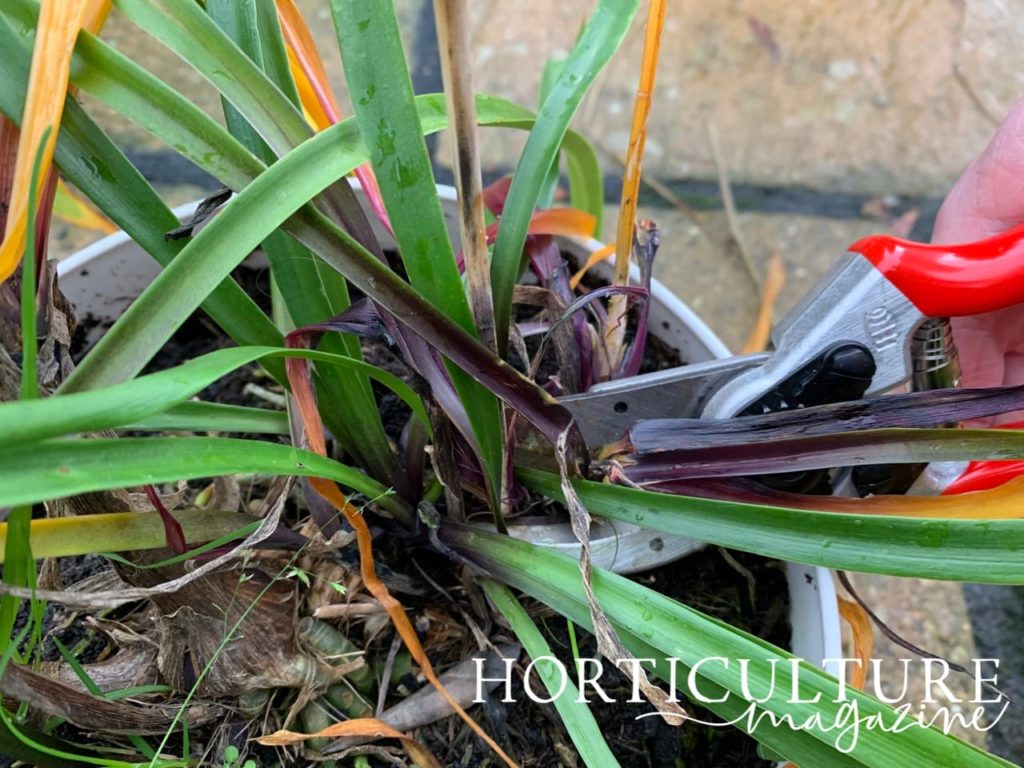
If growing in a container and impress under cover over the winter , you may choose to write out the plants right back down to the crown in Autumn ( as shown above ) .

“ Agapanthus stems can be pruned at earth level when the flower has go over unless you need to leave them in the garden for winter structure , ” says Patrick Fairweather , the Managing Director of Fairweather ’s Nursery .
“ Flower stem should also be removed from immature plants to advance tooth root and shoot ontogenesis . ”
Provided you overwinter adequately you will see novel shoots of ontogeny in the undermentioned Spring .

I cover the works picture in the image above with a level of mulch and it survived the winter outdoors next to our garden wall .
Pruning Evergreen Agapanthus
Evergreen Agapanthus should usually not be pruned or cut back .
It should be left alone , away from removing any unsightly leave or removing particular portions of the plant with a little trim to improve its ocular appearance .
“ I enjoy the leafage of evergreen Agapanthus in the winter when most other perennials have died back , ” admits Colin .
“ I pull up stakes the stagnant blossom stems in place for attractive former winter social organization but remove these as wintertime progresses and the shank begin to degrade . ”
